3 Million Vulas (and counting!)
Vula Team
·
Three million
Vula has just passed 3 million patient referrals.
Because that is what the number is made of. Not data points, but people. A farmer with a swollen wrist on a Friday afternoon. A child with a burn. A patient who needed a specialist opinion, and needed it quickly. Three million times, a health professional sent that patient's case to someone who could help, and someone answered.
What three million looks like
It is a difficult number to picture, so here is one way to hold it.
Three million is more than the number of people covered by any single medical scheme in South Africa. Discovery Health, the country's largest, has roughly 2.73 million beneficiaries. GEMS, the second largest, has more than 2.4 million. It gives a sense of the footprint.
Today, more than 45,000+ health professionals registered on Vula across from South Africa, Zambia, Botswana, Lesotho, Swaziland. Together they send over 2,000+ patient referrals a day, and the average specialist response comes back in around fifteen minutes.
Why clinicians keep using it
Scale like this do not come from a marketing campaign. It comes from solving something that was genuinely need.
Before Vula, a doctor in a district hospital needing a specialist opinion had to phone around and hope someone answered, that could take up to 45minute +. Referral letters travelled with patients on long, expensive journeys, often to be told the trip had not been necessary at all.
In rural areas, one in five patients can now be helped through Vula without being transferred to a specialist hospital at all. At Ngwelezana Hospital in northern KwaZulu-Natal, up to 1,500 patient referrals a month are assessed through the app before anyone travels. Patients who used to make a 250 km trip to find out they did not need specialist care now get that answer the same day.
There is a second effect that clinicians mention often. Every time a doctor gets feedback from a specialist, they learn something. Three million referrals is also three million small moments of teaching.
Public and private, on the same platform
The part that surprises people most is who is using Vula.
South Africa is usually described as having two health systems. In practice, our data suggests something closer to a single spectrum, with a great many patients moving across it, paying out of pocket to see a private GP, then relying on a public hospital when they need a specialist.
Those patients are the ones Vula helps most. At some public hospitals, referrals arriving from private practitioners now make up the majority of everything coming through, and every day, clinicians in the major private hospital groups reach out to public sector colleagues to get their patients the right care. Emergency doctors, surgeons, nurses, psychiatrists, physiotherapists.
Healthcare does not work in isolation.
Backed by evidence
Vula is one of the most independently researched digital health tools in the country, with 15 published studies examining its use. The Health Systems Trust has recognised Vula as a Good Practice and interviewed our users on video. In December 2025, Vula was named Overall App of the Year and Best Health Solution at the FNB App of the Year Awards.
To everyone who got us here
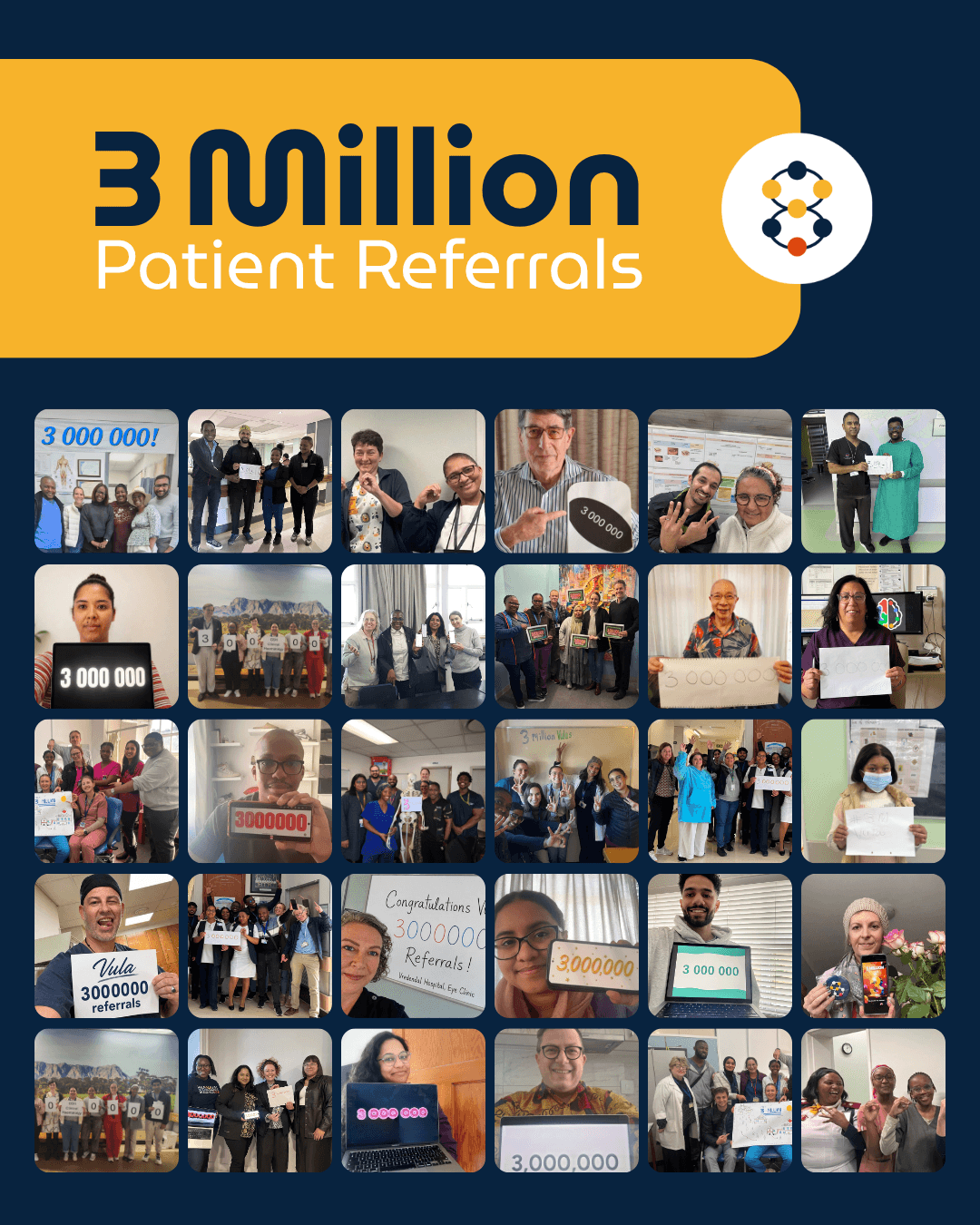
Thank you to every doctor, nurse, specialist and clinical team who chose to send that patient referral through Vula rather than into a queue. The photographs on this page are from users celebrating the milestone with us, from clinics and hospitals across the country. Thank you.
Three million down. And the next patient to come through will still be one in three million.
Are you a health professional? Download Vula and connect with specialists directly.